

Nebraska Wesleyan RISE Reentry Simulation
Since 2017, more than 400 of RISE’s 900 In-Prison Program graduates have returned to the community. In 2025 alone, we welcomed home nearly 80 graduates, each taking their next steps toward stability, opportunity, and belonging.
With LB 50 now fully in effect as of September, we anticipate a significant increase in the number of graduates returning home in the years ahead.
While RISE works to prepare individuals for reentry—through strengths-based development, employment readiness, coping strategies, and personalized reentry plans…preparation cannot stop there. Communities must be ready, too.
Returning well is not the responsibility of one person alone. Successful reentry depends on collective understanding—of the barriers people face, the supports they need, and the opportunities that make lasting change and safer communities possible.
How Does RISE Prepare the Community for Returning Citizens?
RISE centers community education as a catalyst for change by building empathy, challenging assumptions, and helping communities reimagine what second chances can look like.
Through meaningful volunteer opportunities, speaking engagements across sectors, and immersive learning experiences like reentry simulations, RISE works to strengthen families, expand access to lifelong careers, and foster the kind of connected, supportive neighborhoods we all want to be part of.
What is a RISE Reentry Simulation?
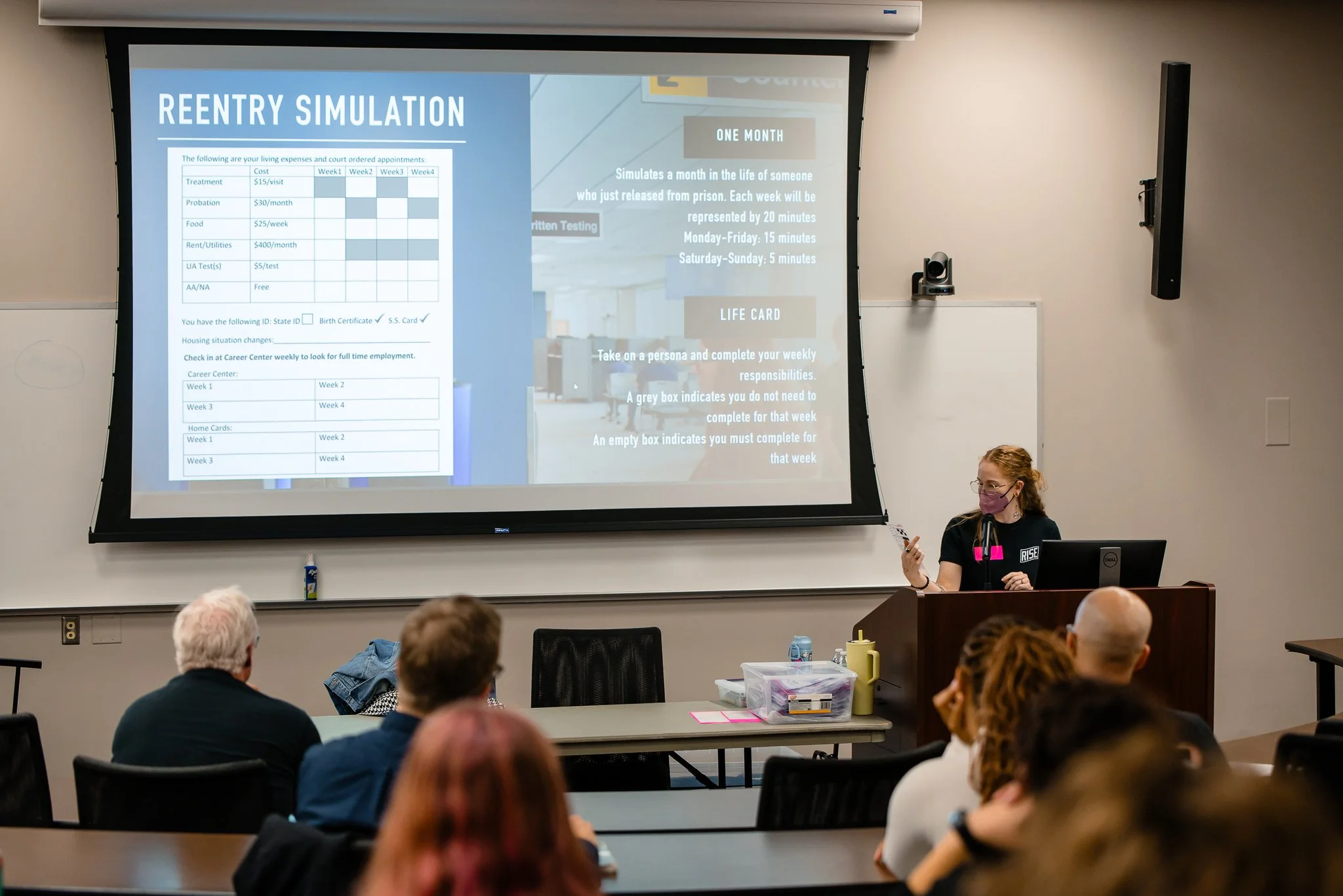
Nearly 95% of people who are incarcerated will eventually return back to their communities. Yet reentry is often marked by crisis, with housing, employment, and financial barriers compounding at every step.
RISE’s reentry simulation is designed to help community members better understand these realities. The invisible handcuffs and systemic roadblocks that people navigating reentry face each day. While no simulation can fully capture the lived experience of returning home after incarceration, this immersive experience is meant to be both thought-provoking and educational, encouraging deeper empathy and informed action.
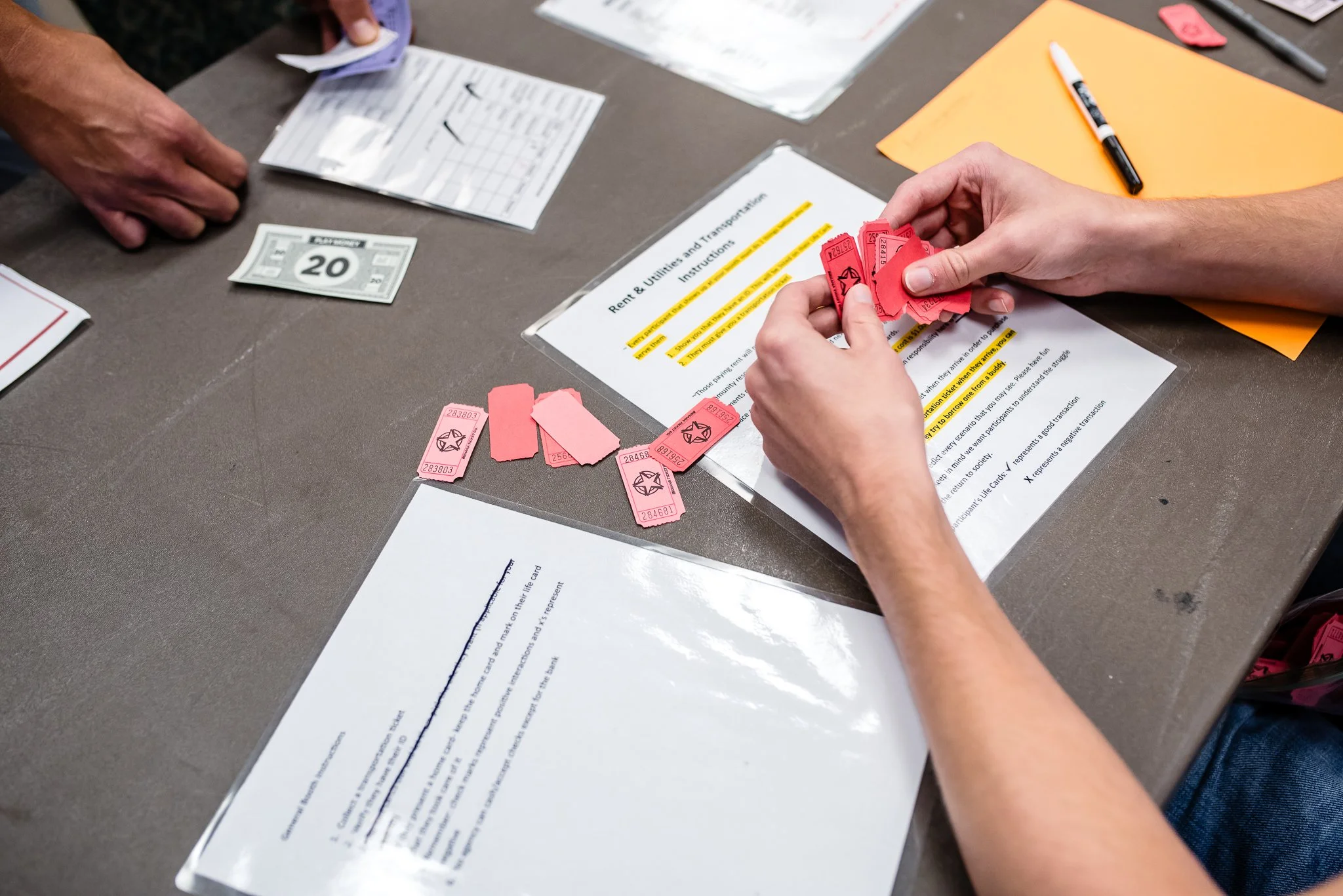
During reentry simulations, participants are assigned a “life card” and mock identity that reflects the experience of someone returning to the community. Over the course of roughly one hour, participants navigate four simulated weeks of reentry, making decisions and encountering challenges common to the reentry process.
The experience concludes with a facilitated debrief led by RISE staff, offering space to reflect, ask questions, and connect the simulation to real-world opportunities for community support and change.
RISE Reentry Simulation at Nebraska Wesleyan University
In November of 2025, RISE was invited by Nebraska Wesleyan University’s Sociology and Criminology Department to facilitate a reentry simulation for their students, faculty, and staff.
Nearly 20 professors and support staff, along with 50 students studying social work, psychology, political science, and criminal justice, participated in this immersive learning experience. In addition to RISE staff, 25 Nebraska Wesleyan students served as volunteers who supported transportation access, social service navigation, and other day-to-day reentry touchpoints throughout the simulation.
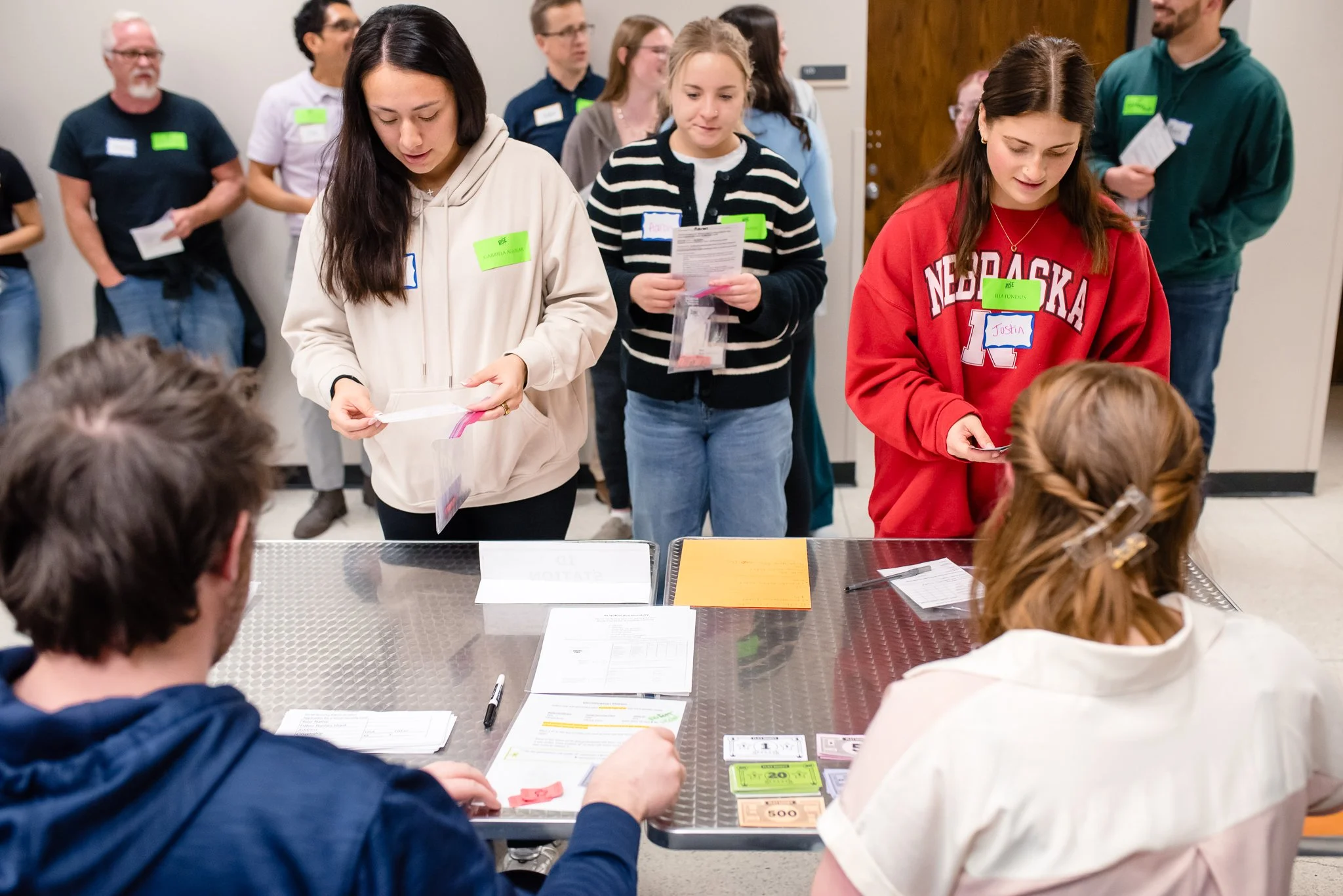
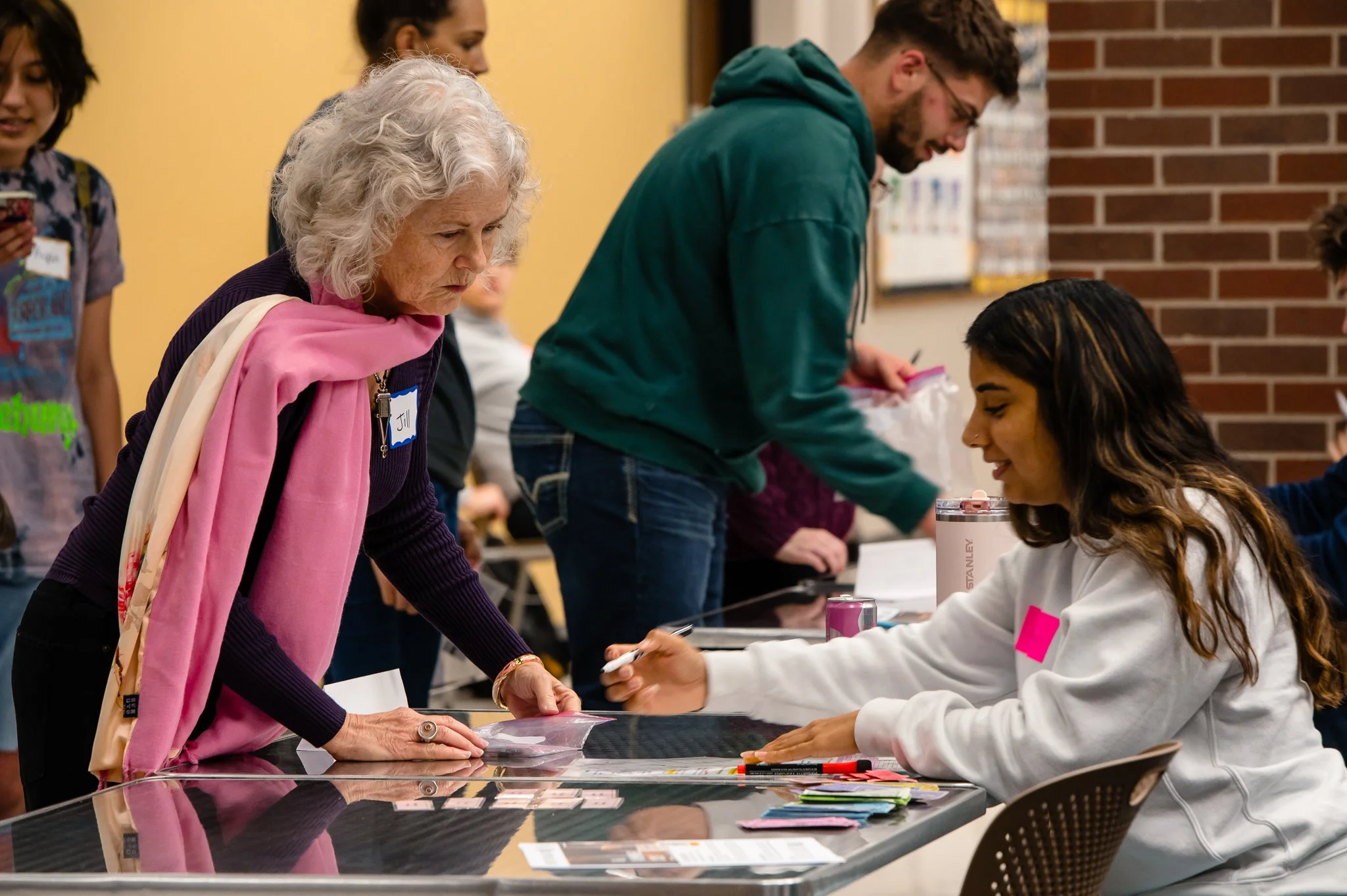
Every reentry simulation unfolds differently, because every participant, much like every person returning to the community in real life, is unique. In both literal and figurative ways, each individual is dealt a different hand. Some begin with slightly more support or favorable circumstances, while others are forced to navigate reentry with little more than survival as their guiding goal.
As the simulation began, students, faculty, and staff alike, entered with a mix of confidence, curiosity, and overwhelm. While that combination may sound contradictory, it is common. Many expressed uncertainty about where to start, paired with a belief that things would ultimately “work out” or “not be that bad.”
As the simulation progressed, the environment shifted. Lines at reentry touchpoints grew longer. Transportation options disappeared. Financial resources were depleted. Compounding life circumstances emerged. The initial confidence gave way to urgency, frustration, and stress.
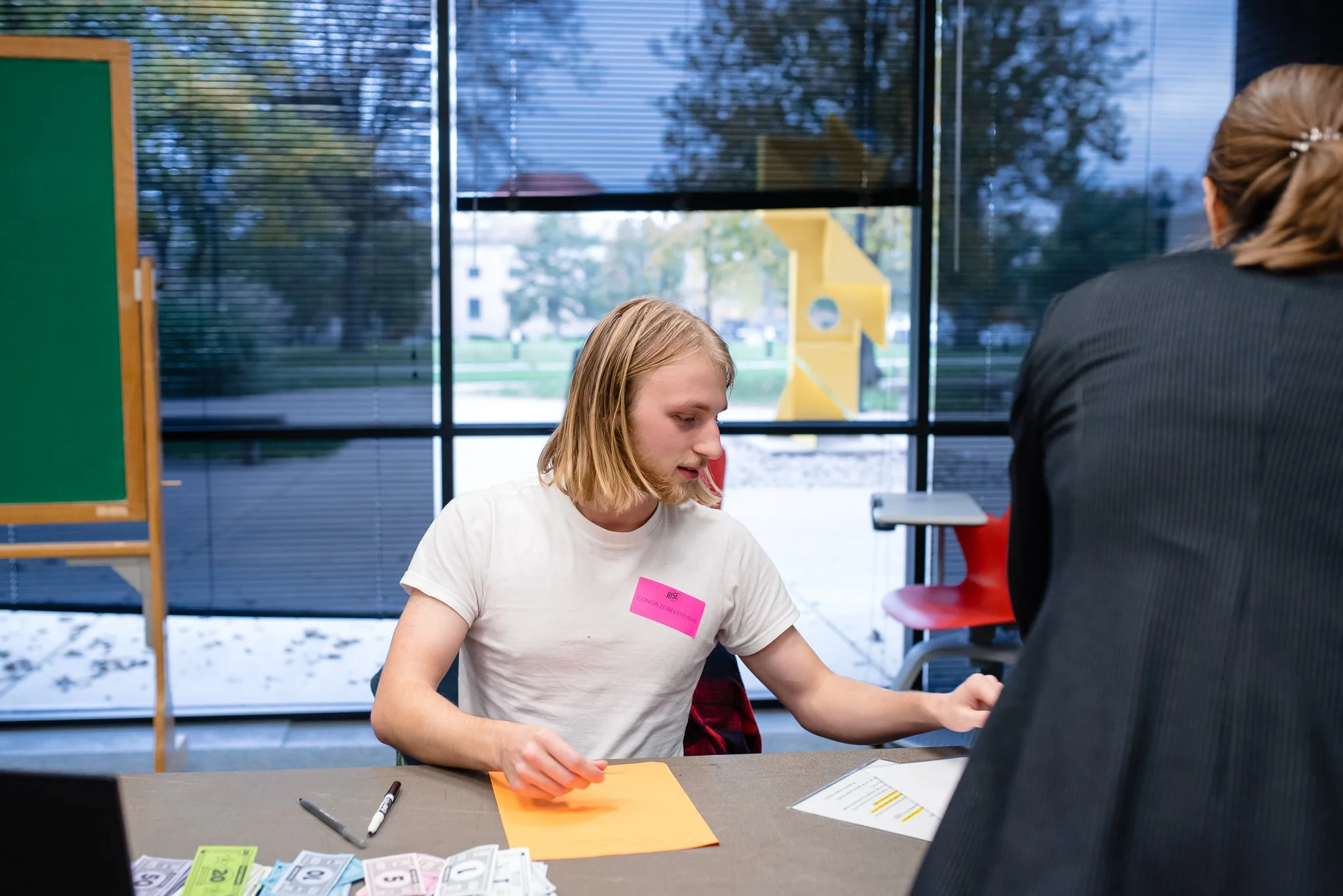
Participants began leaning on one another for support (sometimes simply to avoid feeling alone) despite the reality that, in Nebraska, parole rules often prohibit individuals from associating with others who carry felony convictions.
Frustration mounted as people were told “no” or “come back next week,” only to find they lacked the transportation, money, or prerequisite services needed to move forward. These seemingly small barriers…common in everyday life…quickly compounded, intensifying the crisis that defines reentry. The invisible handcuffs faced by people returning home after incarceration grew tighter as the simulation unfolded.
At this stage in most RISE reentry simulations, a familiar pattern emerges: some participants persist as best they can, some disengage entirely, and others ask for help. Which path a person chooses, both in the simulation and in real life, often plays a significant role in shaping their outcomes.
“It was eye opening how much there is to do in very little time. It is discouraging and makes one want to give up.”
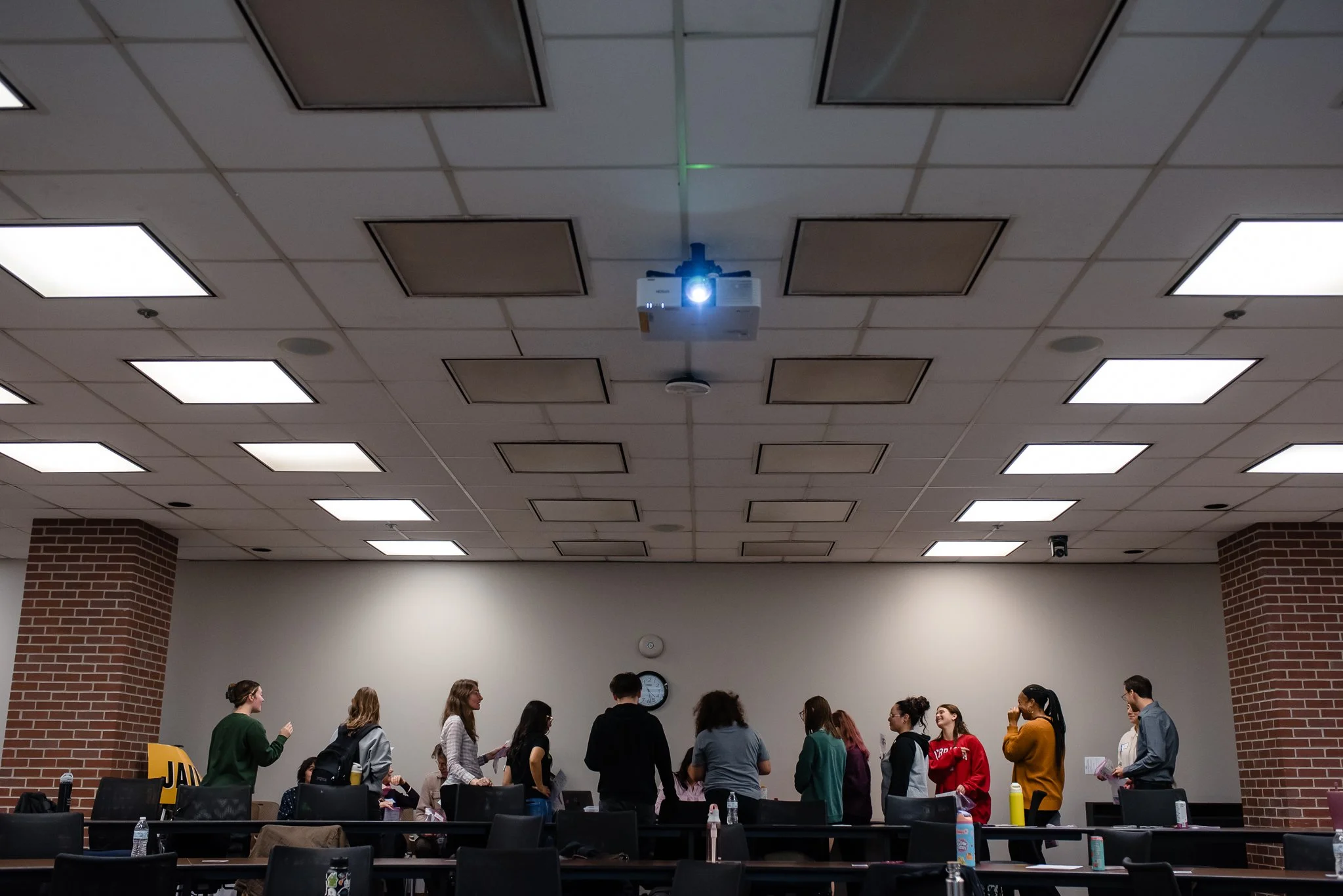
In this instance, the intensity of the experience led a large group of participants to band together and disrupt the simulation using scenarios such as “holding up the bank,” “robbing the pawn shop,” and “breaking out of jail” to express mounting frustration. As the simulation moved beyond its intended learning objectives, RISE staff made the decision to end the experience early.
This moment created an important opportunity to pause, reflect, and engage in conversation about what surfaced, why it happened, and what it reveals about the pressures and decision-making realities faced by individuals navigating reentry.
While these actions would carry serious consequences in real life, for both individuals and the broader community, it is important to acknowledge how quickly survival-based thinking can take hold when people are overwhelmed, desperate, under-resourced, and told “no” at every turn. When individuals are pushed into crisis without support, harmful choices can begin to feel like the only available options. Hurt people hurt people.
“Moments like this capture exactly what I hoped the simulation would accomplish: creating space for students, faculty, and staff to learn through discomfort by intentionally stepping into the lived realities of those with far less privilege.”
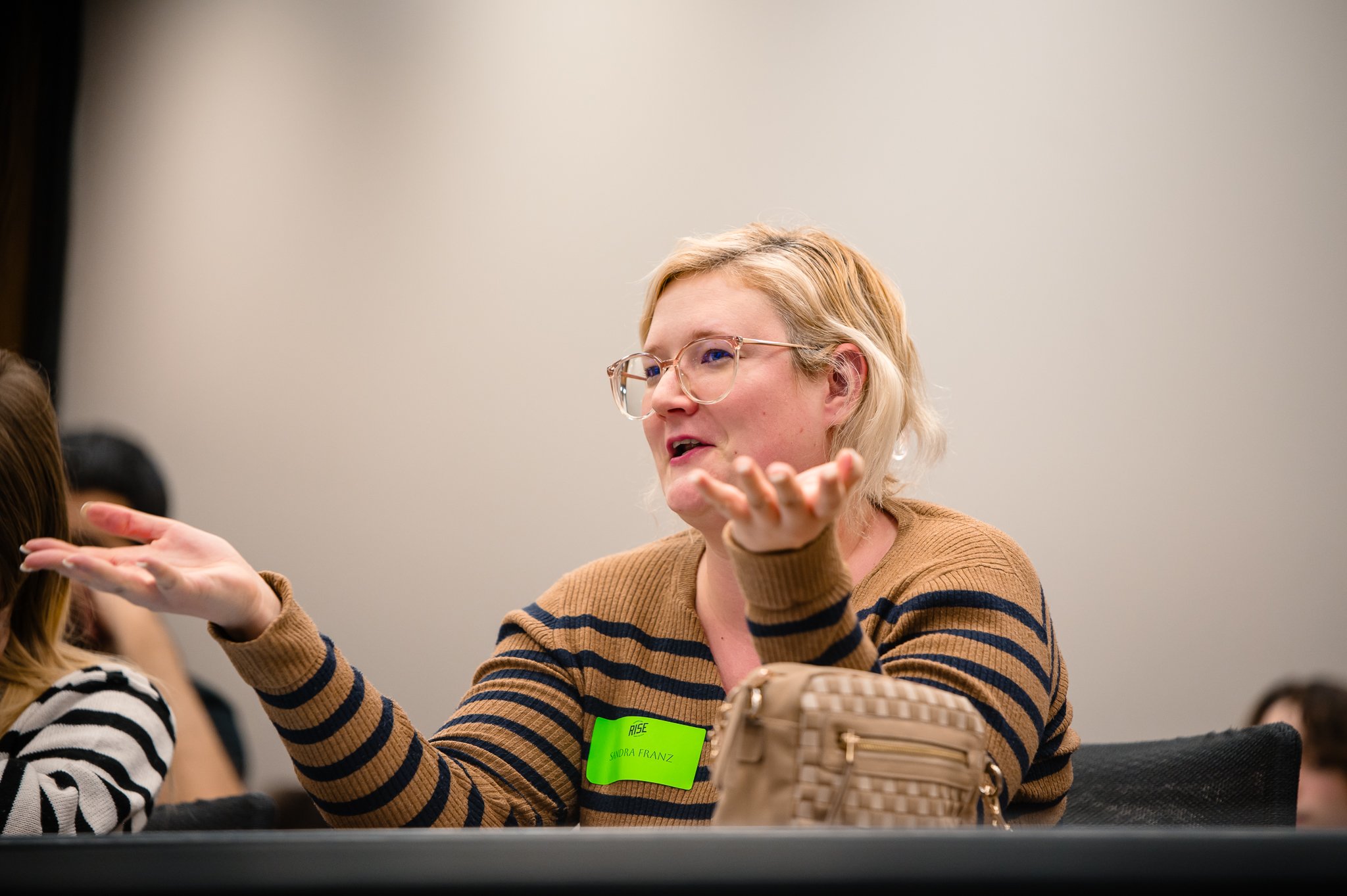
Reflecting on the experience, Heba Khalil, Ph.D., Assistant Professor and Chair of the Department of Sociology and Criminology at Nebraska Wesleyan University, shared:
“Even a month after the Reentry Simulation, students continue to return to conversations about the challenges of reentry and the ways the experience reshaped their understanding. Just last week, one of my Sociology students who participated in the simulation asked whether it could become an annual event—reflecting that even an hour of experiencing the discomfort of reentry was enough to fundamentally shift how they think about individuals returning to society after incarceration. Moments like this capture exactly what I hoped the simulation would accomplish: creating space for students, faculty, and staff to learn through discomfort by intentionally stepping into the lived realities of those with far less privilege.”
RISE extends sincere appreciation to Nebraska Wesleyan University’s Sociology and Criminology Department for creating space for experiential learning and critical reflection. We are grateful to the faculty, staff, and volunteers who engaged thoughtfully with the simulation and to the students who participated with curiosity, openness, and a willingness to grapple with the complexities of reentry. Learning experiences like this deepen understanding in ways that traditional classroom instruction alone cannot.
Educational opportunites such as this underscore that successful reentry is a shared responsibility. One that benefits from informed communities, engaged institutions, and sustained support. We invite community members, educators, and students to take the next step: support reentry by donating to programs like RISE that remove barriers, volunteering time and expertise, advocating for policies that promote safety and opportunity, and leading with empathy for those returning home.
For more information on how you can host a RISE Reentry Simulation for your organization or school, send us a message below.